Gold Drops Below $4,000 as Oil Surge Triggers Fed Rate Fears
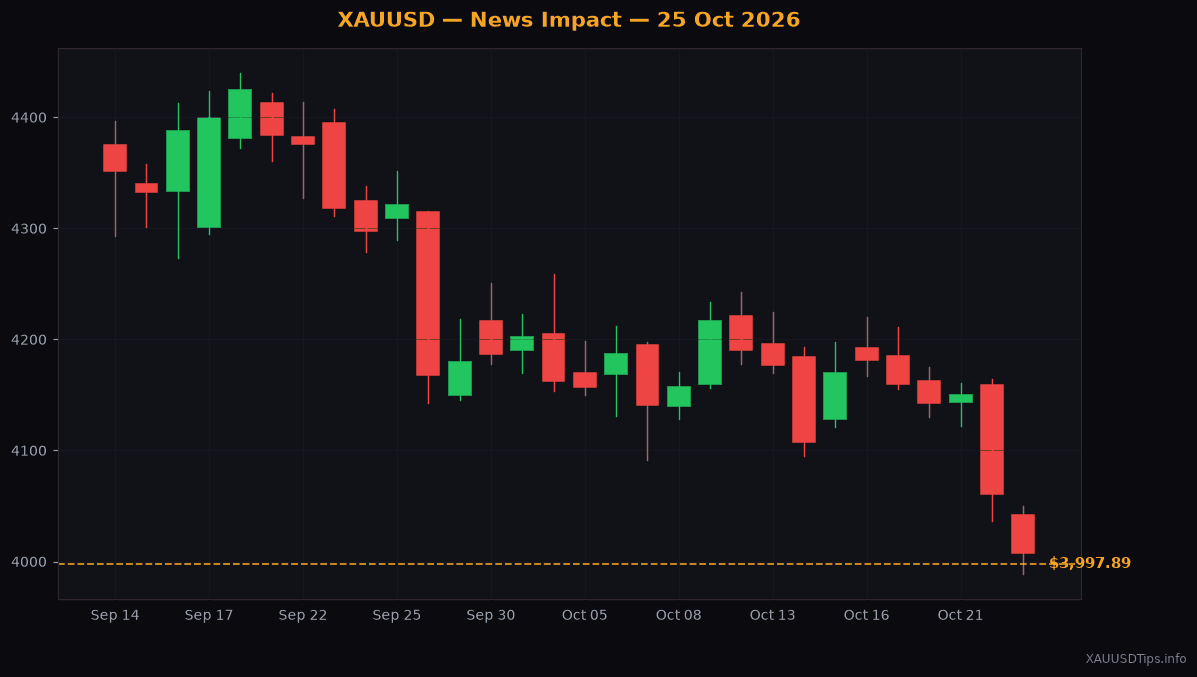
Gold fell to $3997.89 as rising energy prices sparked fears of higher interest rates from the Fed. Here is what it means for you.
Gold took a heavy hit today, dropping by $52.50 to sit at $3997.89. Seeing the yellow metal slide under the major $4,000 mark might feel alarming if you are holding a trade right now. I know how stressful it looks when red candles take over your chart in a matter of hours.
So, what brought on this sudden drop? The main culprit behind today's price crash is a sudden surge in global energy prices and crude oil costs.
What Happened
Rising oil prices are making investors worried that inflation (the rate at which everyday goods get more expensive) will start climbing again. When energy gets pricey, everything from gas at the pump to groceries on the shelf becomes more expensive for families and businesses.
Because of this energy shock, traders are suddenly betting that the Federal Reserve (the US central bank, often called the Fed) might have to raise interest rates (the cost of borrowing money) to cool down the economy. Just a week ago, most people expected interest rates to stay steady or go lower. Today, those expectations have flipped completely.
When bond yields (the annual interest return you get for lending money to the government) jump alongside rate fears, big institutions quickly adjust where they keep their cash. That big money moving around is what rocked the market today.
Why Gold Cares
Why does a jump in energy prices push gold down instead of up? It comes down to how interest rates affect where big money flows. Gold is a classic safe asset, but it pays zero dividend or yield to the holder.
When interest rates rise, money market accounts and government bonds start offering much higher guaranteed payouts. If a safe government bond pays you a solid return every month, holding gold feels less attractive because gold pays you zero passive income.
Think of it like choosing between two bank accounts. If Account A gives you monthly interest payments and Account B pays zero, you will naturally move your cash into Account A. That shift in investor preference is why high interest rate expectations pull cash out of gold and drive the price lower.
What This Means for You
If you follow local markets in Pakistan, India, or the UAE, you might notice jewellery prices following this global move downward over the weekend. But on your trading chart, the biggest rule today is simple: do not rush into revenge trades.
When a major psychological level like $4,000 breaks, volatility (how fast and wildly prices jump around) shoots through the roof. Small traders often get hurt trying to catch a falling knife. Instead of guessing where the floor is, wait for the price to settle and form a clear support (a price floor where buyers step in to stop a drop).
Keep your trade size small and always set a stop-loss (an automatic exit tool that cuts your trade if the market moves against you). Protecting your account balance matters far more than catching every single move.
Bottom Line
Gold slipped under $4,000 because rising oil prices renewed fears that the Fed will hike interest rates.
Written by XAUUSDTips Team. Not financial advice. Trade at your own risk. Technical levels partially referenced from LiteFinance analysts.
XAUUSDTips Editorial
Published October 25, 2026