Gold Support and Resistance Explained: Today's Guide
Learn how to read gold charts like a map using support and resistance levels. We explain this beginner concept with today's real market prices.
Did you check the gold price when you woke up today, September 8, 2026? It is sitting at $4391.19 right now. That is up just $6.80 since yesterday. It feels like the market is waiting for something big to happen.
There is a lot of noise in the financial news right now. Oil prices are jumping past $92.00 because of new tensions in the Strait of Hormuz. When oil prices go up, it often hurts local currencies like the Indian Rupee. If you are in India or Pakistan, you might notice local jewelry prices rising even when the global price stays flat. This happens because your local currency loses value against the US Dollar.
With all this global chaos, you might wonder how anyone makes sense of the charts. How do traders decide when to buy or sell? Today, I want to teach you two of the most basic ideas in technical analysis. These are called support and resistance. Once you understand these, charts will stop looking like random squiggles.
Think of these concepts like a house. Support is the floor beneath your feet. Resistance is the plaster ceiling above your head.
Let us look at resistance first. Resistance is a price level where sellers usually step in. They look at the high price and think it is a great time to sell and take profits. This sudden flood of selling stops the price from climbing higher. It acts just like a solid ceiling.
Now let us look at the floor. Support is a price level where buyers think gold is cheap. They see a bargain and start buying in large amounts. This extra buying pressure stops the price from falling any further. The price bounces off this floor and goes back up.
Why do these floors and ceilings exist? It is all about human psychology and memory. Traders remember where the price turned around in the recent past. If gold struggled to get past $4,450.00 last week, traders expect it to struggle there again today. They place their orders at these exact spots because they expect history to repeat itself.
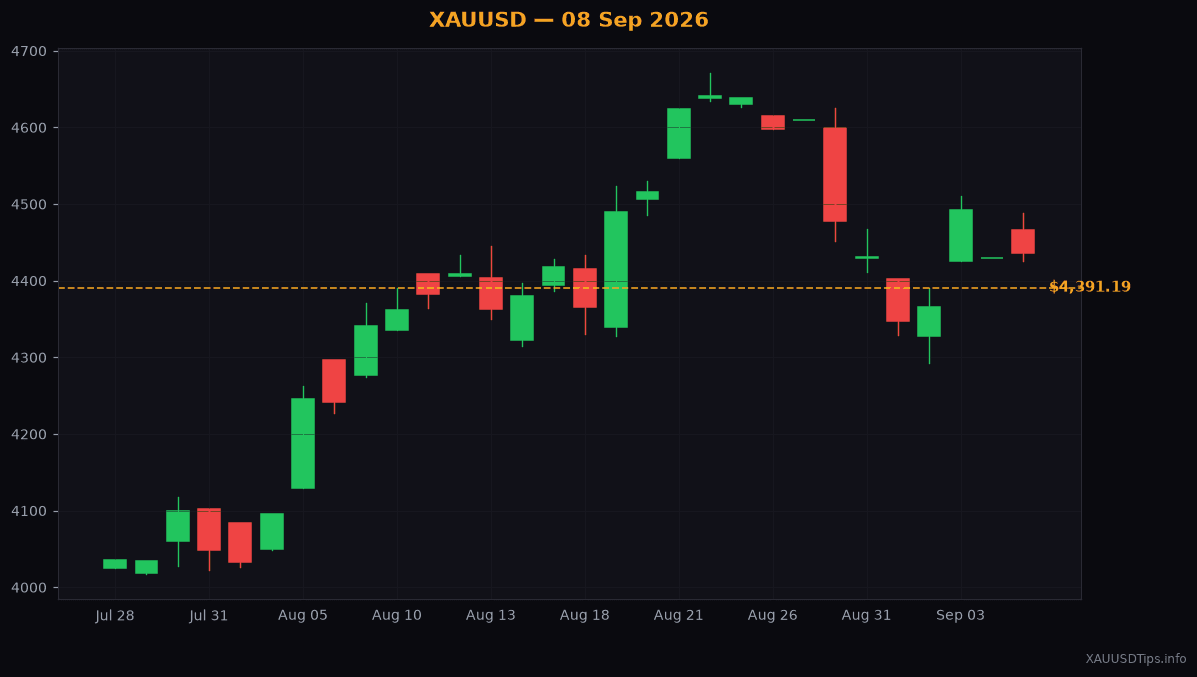
Let us apply this to today's real market chart. Right now, gold has a strong ceiling between $4,436.00 and $4,451.00. Sellers are actively defending this zone. They do not want the price to break above it.
As long as gold stays below this ceiling, the price might drift down to find a floor. The first floor we are watching is around $4,367.00. If the price reaches this level, we might see buyers step in to hold it up. But if that floor breaks, the price could drop to the next major floor at $4,282.00.
What if the buyers get super strong and push the price right through the ceiling? If the price breaks above $4,464.00, it means the ceiling has broken. Traders call this a breakout. When a ceiling breaks, it often turns into a new floor. The sellers have lost control, and the buyers are now driving the market.
Imagine throwing a tennis ball up at your ceiling. If you throw it hard enough, it might smash through the plaster. Once the ball is up on the second floor, that same plaster ceiling is now the floor beneath the ball. That is exactly how support and resistance swap roles.
So, how do you use this as a beginner? Do not try to guess when a level will break. Instead, look at how the price behaves when it gets close to these zones. Does it hesitate? Does it bounce away quickly?
If you are tracking prices from Karachi, Dubai, or Mumbai, you can apply this to your local charts too. Spotting these zones can help you avoid buying at the absolute worst time, like right before the price hits a ceiling.
Try opening a free demo account today. Find a gold chart and try to draw these horizontal lines yourself. Look for areas where the price bounced multiple times. It is a great way to build your confidence without risking your real savings.
Written by XAUUSDTips Team. Not financial advice. Trade at your own risk. Technical levels partially referenced from LiteFinance analysts.
XAUUSDTips Editorial
Published September 8, 2026